The Truth About the Acer Nitro Kg272: Pros, Cons, and Verdict
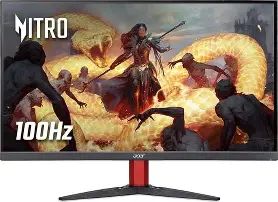
The Acer Nitro Kg272 occupies a familiar spot in the budget gaming monitor market: a 27-inch screen pitched at users who want high refresh rates without paying high-end prices. On paper it promises the headline attractions gamers care about — a large panel, competitive refresh rates, and gaming-focused features such as low response times and adaptive sync. In practice the Kg272 is a compromise product: it delivers meaningful benefits for specific users (competitive players on a budget, console gamers who want fluid motion) but it also shows the limits of value-focused displays when compared to higher-tier alternatives.
Introduction: Who the Kg272 is for
The Acer Nitro Kg272 targets price-conscious gamers who prioritize smooth motion over pixel density or professional color accuracy. Typical buyers include:
- Esports and fast-FPS players who want 120–165Hz (or higher) refresh without a premium price.
- Console players using PlayStation or Xbox who want a larger, responsive screen for action and racing titles.
- Casual gamers and general users who want a roomy 27-inch display for desktop productivity and media consumption, with a gaming tilt.
Buyers who demand high-fidelity color for photo or video editing, or those who want a 4K upgrade, will likely outgrow the Kg272 fast. For its intended audience, though, the monitor can be a pragmatic pick — provided the trade-offs are understood.
Detailed product review and analysis
Design and build quality
The Kg272 follows the current budget-gaming aesthetic: a matte black chassis, modestly aggressive accents, and a stand that balances stability with limited ergonomics. Build materials are largely plastic, but the unit typically feels solid and free of major flex. The bezels are relatively thin on three sides, which helps multi-monitor setups, though they are not the ultra-slim edges seen on premium panels.
Stand adjustability varies between SKUs — users should expect tilt and some height adjustment in many variants, but full swivel and pivot may be absent or limited. VESA mounting is usually supported, allowing users to fit third-party arms for greater flexibility.
Panel, resolution, and image quality
The Kg272 is generally offered as a 27-inch Full HD (1920×1080) display. That choice favors high refresh rates at a lower price, but it also means pixel density is lower than what many users expect on a 27-inch screen: text and UI elements appear less sharp than on 1440p panels. For gaming, however, the size-to-resolution trade is reasonable — many GPUs can push higher frame rates at 1080p, which is the primary aim of the Kg272.
Panel technology can vary by region and exact SKU. Buyers may find either VA or IPS variants. In practice, a VA panel will deliver deeper blacks and stronger contrast, while an IPS panel will offer wider viewing angles and more accurate colors. Acer's marketing sometimes lists aggressive response-time numbers (1 ms MPRT), but measured gray-to-gray response and overdrive behavior can be more modest — expect some motion blur in fast transitions unless overdrive settings are tuned carefully.
Refresh rate, response time, and gaming performance
Where the Kg272 shines is in motion fluidity. Typical refresh rates for this family sit in the 144Hz range, with some models nearing 165Hz depending on distribution. That makes the Kg272 a clear step up from standard 60Hz panels: aiming for control and responsiveness, it helps competitive players track targets more smoothly and experience lower perceived input delay.
Adaptive sync support (FreeSync and often G-Sync Compatible behavior) is common, reducing screen tearing when frame rates vary. Input lag tends to be low for panels in this category, which matters for twitch-sensitive gameplay. However, the monitor's pixel processing and overdrive tuning will determine whether fast motion looks clean or smeared. In many real-world sessions the Kg272 delivers satisfying competitive performance if the user accepts a small amount of trailing or ghosting at extreme motion.
Looking for the best Laptops & Computers deals on Amazon?
Browse Now →Connectivity and features
Expect a practical but basic port selection: DisplayPort and HDMI inputs are standard, with at least one of each for PC and console connectivity. Some models include multiple HDMI ports to accommodate a gaming console and a media streamer simultaneously. USB hubs are not guaranteed on every SKU, so users who depend on built-in USB passthrough should confirm the exact configuration.
Other convenience features typically include built-in on-screen display (OSD) game modes (FPS, RTS, Racing), crosshair overlays, and dark boost or black tuner settings to reveal shadow detail. HDR support, if present, is usually nominal and limited by HDR peak brightness and color gamut — this monitor should not be seen as a true HDR showcase.
Ergonomics and software
Ergonomically, the Kg272 is practical for desktop use. Tilt and limited height adjustment facilitate a comfortable viewing position for most desks. Those planning extended work sessions or using the screen for productivity should consider an aftermarket arm for improved posture and multi-screen alignment.
OSD navigation is functional; the menu provides access to picture preset modes, response-time settings, and adaptive-sync toggles. Some variants ship with a joystick controller for easier menu operation, which is a welcome convenience over multiple small buttons.
Real-world use cases: what buyers typically care about
Competitive PC gamers
For players focused on FPS and multiplayer titles, the Kg272 gives a clear value proposition: a 27-inch canvas with high refresh for consistent frame-rate chasing. At 1080p, many mainstream GPUs can sustain 144+ FPS in popular esports titles, which makes the Kg272 an attractive match. The main caveat is that some competitors at similar prices offer faster pixel response or better calibration out of the box — so competitive players should be ready to tweak overdrive and color settings.
Console and living-room gamers
Console owners who want a larger screen for single-player and party games find the Kg272 appealing due to size and responsiveness. HDMI support and easy setup make it practical for use on TV stands or desks. Those who own next-gen consoles (with 120Hz modes in some titles) will get a better experience than on 60Hz TVs, though features such as console-optimized HDR and advanced tone mapping remain limited.
Casual productivity and media
People using the Kg272 for office tasks and streaming will appreciate the extra screen real estate for side-by-side windows. However, the Full HD resolution on 27 inches results in lower pixel density, which can make small text softer. For spreadsheets and long-form reading, a 1440p panel would be noticeably crisper.
Pros & Cons
Pros
- High refresh at a budget price: Delivers smooth motion for gaming without the premium cost of higher-resolution 27-inch panels.
- Large, immersive screen: 27-inch size works well for both gaming and multimedia consumption.
- Adaptive sync: FreeSync support (and often G-Sync compatibility) reduces tearing and improves perceived fluidity.
- Practical feature set: Useful OSD game modes, multiple inputs, and VESA compatibility for flexible setups.
- Solid build quality for price: Stable stand and a tidy finish that doesn’t feel cheap in everyday use.
Cons
- Low pixel density at 27" 1080p: Text and UI elements are softer than on 1440p or 4K displays.
- Color and calibration limitations: Out-of-the-box colors and uniformity can be hit-or-miss; not ideal for color-critical work.
- Panel variability: Different SKUs can use different panel types, creating inconsistent experience between units and regions.
- Limited ergonomics on some models: Full swivel/pivot may be missing; an external arm might be necessary for advanced setups.
- Basic HDR implementation: HDR is often nominal due to limited peak brightness and gamut coverage.
How the Kg272 stacks up: a quick comparison
| Model | Size | Resolution | Refresh Rate | Panel Type (typ.) | Adaptive Sync | Best for |
|---|---|---|---|---|---|---|
| Acer Nitro Kg272 | 27" | 1920×1080 (Full HD) | 144Hz (many SKUs) | VA/IPS (varies by SKU) | FreeSync / G‑Sync Compatible (typ.) | Budget competitive gaming; console users wanting higher refresh |
| AOC 27G2 (competitor) | 27" | 1920×1080 (Full HD) | 144Hz | IPS | FreeSync / G‑Sync Compatible | Budget gamers wanting better colors and viewing angles |
| Typical 27" 1440p 144Hz | 27" | 2560×1440 (QHD) | 144Hz–165Hz | IPS / Fast VA | FreeSync / G‑Sync Compatible | Users wanting sharper text and better detail for mixed use |
Buying guide: what to check before purchasing the Kg272
1. Confirm the exact SKU and panel type
Manufacturers sometimes ship different panel variants under the same model family. Check the product code or retailer specification: some Kg272 units use VA panels for deeper contrast, while others use IPS for color and viewing angles. Choose according to priority — contrast or color fidelity.
2. Decide if 1080p on 27" is acceptable
At 27 inches, Full HD sacrifices pixel density. If the primary use is competitive gaming where frame rate matters more than fine text, 1080p is acceptable. If reading, design work, or productivity tasks are central, consider stepping up to 1440p.
Shop the latest Laptops & Computers picks on Amazon.
Shop Amazon →3. Look for the refresh rate and overdrive options
Verify the advertised refresh rate (144Hz vs 165Hz) and read reviews that test overdrive/response to understand motion clarity. A higher refresh rate is only useful if the panel’s pixel response keeps up; otherwise, trailing artifacts may offset the benefit.
4. Check connectivity and ergonomic needs
Make sure the monitor has the ports needed for your setup (DisplayPort for PC at high refresh, HDMI for consoles). Validate whether the included stand offers the tilt and height adjustment required or if a VESA arm will be needed.
5. Consider warranty and after-sales support
Budget monitors are more likely to have limited warranties or varied service experiences across regions. Confirm the local warranty length and return policy to reduce risk if the unit arrives with panel defects or banding.
6. Read measured reviews and user feedback
Look for reviews that include independent measurements: color gamut, delta-E calibration, response-time tests, and input lag. User feedback can also reveal quality-control trends (backlight bleed, dead pixels) that matter for first-hand experience.
Final verdict
The Acer Nitro Kg272 is a pragmatic option for gamers who prioritize frame rate and screen size over pixel density and color perfection. Its strengths are clear: a large 27-inch canvas, refresh rates that materially improve responsiveness, and a gaming-oriented feature set that will satisfy many competitive and console players. The compromises are equally clear: a Full HD resolution on a 27-inch panel results in softer text, color accuracy and HDR capabilities are limited for creative professionals, and panel variants can produce inconsistent experiences across regions.
In short, the Kg272 represents good value when matched to the right buyer. It is a suitable upgrade for players coming from 60Hz displays who want a more fluid feel in shooters and racing games, and it is a sensible living-room or desk monitor for users who value motion over pixel count. Buyers who need sharper text, professional-grade color, or true HDR should look at 1440p or higher-tier options. Those who choose the Kg272 should verify the exact SKU, confirm the panel type, and be prepared to tweak settings for optimal motion clarity.
For the target audience — budget-minded gamers and console owners seeking smoother gameplay — the Acer Nitro Kg272 earns a cautious recommendation: it does what it promises in the areas that matter most for gaming, but it does not pretend to be more than a value-focused display. Assess priorities, check the specific model’s specs, and the Kg272 can be a dependable member of a performance-oriented setup.