Don't Buy the Rx0 Ii Until You Read This Full Analysis
Introduction
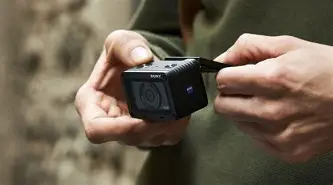
The electronics market is often dominated by predictable cycles of incremental updates, but every so often, a device arrives that defies traditional categorization. The Sony RX0 II is exactly that kind of anomaly. On first glance, its diminutive, rugged chassis suggests it is an action camera designed to go head-to-head with the industry leaders in the adventure segment. However, a deeper look at its internal specifications—most notably its large 1-inch sensor and Zeiss optics—reveals a device that aspires to be a professional-grade cinema tool and a high-end compact still camera shrunk down to the size of a matchbox. Because it occupies this strange middle ground between a GoPro and a Sony RX100, many prospective buyers find themselves confused about what the device actually is, and more importantly, who it is for.
The decision to invest in the RX0 II is not one that should be made based on form factor alone. While its predecessor laid the groundwork for a modular, multi-camera array system, the "Mark II" iteration introduced features like an internal 4K recording capability and a tiltable LCD screen, signaling a pivot toward individual content creators and vloggers. Yet, the camera retains many of the quirks that made the original RX0 a polarizing piece of technology. This analysis aims to dissect the technical capabilities, the ergonomic realities, and the real-world performance of the RX0 II to determine if it truly earns a spot in your kit or if it is a specialized tool that will ultimately leave the average consumer frustrated.
Detailed Product Analysis: Engineering Marvel or Ergonomic Nightmare?
To understand the RX0 II, one must first look at the heart of the machine: the 15.3-megapixel 1-inch Exmor RS CMOS sensor. In the world of ultra-compact cameras, a 1-inch sensor is a massive luxury. Most action cameras rely on much smaller 1/2.3-inch sensors, which struggle significantly in low-light environments and offer limited dynamic range. By including a 1-inch sensor, Sony has provided a level of image fidelity—specifically in terms of color depth and noise management—that is virtually unheard of in this size class. This sensor is paired with a fixed 24mm equivalent Zeiss Tessar T* f/4 lens. The choice of an f/4 aperture is one of the most debated aspects of the device; while it ensures edge-to-edge sharpness and contributes to the camera's compact size, it limits the "bokeh" or background blur that many creators crave, and it requires more ambient light than the f/1.8 lenses found on larger RX100 models.
Video Performance and Features
One of the primary reasons users gravitate toward the RX0 II is its video prowess. Unlike the original RX0, which required an external recorder to capture 4K footage, the Mark II records 4K internally with full pixel readout and no pixel binning. This results in incredibly sharp footage with minimal moiré and aliasing. For the professional videographer, the inclusion of S-Log2 is a significant boon, allowing for greater flexibility in color grading during post-production. Furthermore, the camera offers high-frame-rate (HFR) shooting up to 1000fps, turning mundane moments into cinematic slow-motion sequences.
However, the video experience is hampered by a lack of continuous autofocus (AF-C) during movie recording. This is a critical point that many buyers overlook. In an era where most cameras offer sophisticated eye-tracking and face-detection AF, the RX0 II relies on preset focus or single-shot AF before you start recording. If you move closer to or further from the lens while filming, you risk falling out of the depth of field. Because the lens is an f/4, the depth of field is relatively deep, which mitigates the issue to some extent, but it remains a significant hurdle for those used to the "set it and forget it" nature of modern mirrorless cameras.
Build Quality and Durability
Sony has engineered the RX0 II to be nearly indestructible. The duralumin body is waterproof down to 10 meters (33 feet) without a housing, shockproof from drops of up to 2 meters (6.5 feet), and crushproof under up to 200kg (440lb) of force. This ruggedness is not just for show; it allows the camera to be placed in positions where a traditional camera would be destroyed. It is frequently used in "crash cam" scenarios for cinema or mounted in tight spaces for unique perspectives in sports broadcasting. The addition of the 180-degree tiltable LCD screen is a feat of engineering, maintaining the camera's waterproof integrity while providing a way for vloggers to frame themselves—at least in theory. The screen is tiny, making it difficult to judge fine details, but it is a welcome upgrade over the fixed screen of the original model.
Pros and Cons
Evaluating the RX0 II requires weighing its professional-grade internals against its physical limitations. Below is a breakdown of the primary advantages and drawbacks encountered during extended use.
Shop the latest Electronics picks on Amazon.
View Offers →- Pro: Exceptional Image Quality - The 1-inch sensor produces images with far more detail and better dynamic range than any standard action camera.
- Pro: Ultra-Compact and Rugged - Its ability to withstand extreme pressure, water, and drops makes it an ideal "B-roll" camera for dangerous environments.
- Pro: Internal 4K and S-Log2 - Professional video features are packed into a device that fits in a coin pocket.
- Pro: Tiltable Screen - The 180-degree flip screen helps with vlogging and high/low angle shots, a rarity for ruggedized cameras.
- Pro: Minimal Distortion - The Zeiss 24mm lens is remarkably rectilinear, avoiding the "fisheye" look common in other small cameras.
- Con: No Continuous AF in Video - The lack of AF-C during filming is a dealbreaker for many dynamic shooting scenarios.
- Con: Short Battery Life - The tiny NP-BJ1 battery struggles to keep up, especially when shooting in 4K or high frame rates.
- Con: Poor Low-Light Performance (f/4) - While the sensor is large, the f/4 aperture means the camera needs a lot of light to produce clean images.
- Con: Difficult Menu Navigation - Using the standard Sony menu system on a screen the size of a postage stamp with tiny buttons is an exercise in patience.
- Con: Electronic Stabilization Only - While it has "SteadyShot," it is not as effective as the gimbal-like stabilization found on modern competitors.
Feature Comparison: RX0 II vs. RX100 VII vs. Action Cameras
To put the RX0 II in context, it is helpful to see how it sits between a dedicated premium compact and a standard action camera. The following table highlights the technical trade-offs inherent in these different categories.
| Feature | Sony RX0 II | Sony RX100 VII | Traditional Action Cam |
|---|---|---|---|
| Sensor Size | 1.0-inch | 1.0-inch | 1/2.3-inch |
| Lens Aperture | f/4.0 (Fixed) | f/2.8 - f/4.5 (Zoom) | f/2.8 (Fixed) |
| Autofocus | Contrast Detect (No AF-C in Video) | Phase Detect (Fast AF-C) | Fixed Focus / Deep DOF |
| Durability | Water/Shock/Crushproof | Fragile (Needs Case) | Water/Shockproof |
| Stabilization | Electronic (Moderate) | Optical + Electronic | Advanced Electronic (Gimbal-like) |
| Vlogging Screen | 180-degree Tilt (Tiny) | 180-degree Tilt | Often Dual Screen or Fixed |
Real-World Use Cases: Who Should Actually Buy This?
Because the RX0 II is such a niche product, its value is entirely dependent on how you intend to use it. Here are the scenarios where the camera shines, and where it fails miserably.
The Professional Production Kit
In a professional environment, the RX0 II is an incredible tool. It can be synced with multiple other RX0 units using a dedicated control box, allowing for "bullet time" effects or multi-angle coverage of a single event. Its S-Log2 profile allows it to be color-matched relatively well with Sony’s larger Alpha series cameras. If you need a camera to mount on the wing of a plane, the dashboard of a race car, or inside a small crevice, this is your best option for high-quality footage.
The Everyday Vlogger
For the average vlogger, the RX0 II is a mixed bag. The size is perfect for "stealth" vlogging in public without drawing attention. However, the lack of continuous autofocus means you have to be very careful about your distance from the lens. If you are holding the camera at arm's length (which, with a 24mm lens, results in a very tight "head-and-shoulders" shot), you generally stay in focus. But if you want to show something close to the lens and then flip back to your face, the camera won't adjust. Additionally, the internal microphone is serviceable but prone to wind noise, necessitating an external mic, which then ruins the compact footprint.
The Adventure Traveler
If your version of adventure involves snorkeling, light hiking, and casual beach days, the RX0 II is excellent because of its superior image quality over a GoPro. However, if your adventure involves mountain biking, skiing, or high-intensity running, the stabilization will disappoint you. Unlike the "HyperSmooth" or "RockSteady" technologies found in other action cams, Sony’s internal stabilization isn't powerful enough to smooth out heavy vibrations. You would need to use Sony’s external "Movie Edit add-on" app to post-process the stabilization using metadata, which adds an extra step to your workflow.
Buying Guide: Key Factors to Consider
Before pulling the trigger on the RX0 II, potential owners should ask themselves three critical questions. First, how important is autofocus to your workflow? If you are coming from a smartphone or a modern mirrorless camera, the lack of AF-C in video will feel like stepping back a decade. You must be comfortable with manual focus or relying on the wide depth of field provided by the f/4 aperture.
Second, consider your lighting conditions. The 1-inch sensor is great, but f/4 is not a "fast" lens. In indoor settings or at twilight, the ISO will climb quickly. While the noise is handled better than on a small-sensor camera, it still won't compete with a camera that has an f/1.8 or f/2.0 lens. If you plan to shoot primarily at night or in low-light clubs/restaurants, you may find the results grainier than expected.
Looking for the best Electronics deals on Amazon?
See Deals →Third, evaluate your post-production patience. To get the "perfect" shot out of the RX0 II, you often need to shoot in S-Log2 and color grade later, or use Sony's specific software to stabilize the footage after the fact. It is less of a "point-and-shoot" device and more of a "capture-and-craft" device. If you want a camera that does all the work for you so you can post to social media immediately, this is likely not the right choice.
Ergonomics and Interface: Living with a Miniature Powerhouse
The physical interaction with the RX0 II is perhaps its most polarizing feature. Sony’s decision to use their full-size menu system on such a small device is both a blessing and a curse. It provides granular control over every aspect of the image—shutter speed, ISO, white balance, picture profiles, and even audio levels. However, navigating these menus with buttons that are barely larger than a pinhead can be incredibly frustrating, especially if you are wearing gloves or have larger hands. There is no touch screen functionality, which feels like a missed opportunity in a device of this size where a touch interface would significantly speed up settings changes.
The battery door and port covers are also incredibly sturdy, featuring double-locking mechanisms to ensure waterproofing. While this provides peace of mind, it makes swapping batteries or plugging in a micro-HDMI/USB cable a bit of a chore. For long-term use, many professionals opt to power the camera via the USB port using an external power bank, though this obviously compromises its waterproof capabilities. These ergonomic trade-offs are the price you pay for having a device that is essentially a high-end cinema camera that you can hide in a coffee mug.
Conclusion
The Sony RX0 II is an extraordinary piece of technology that finds itself in a marketing identity crisis. It is too complicated and focus-limited to be the perfect action camera for the masses, yet it is too small and ergonomically challenged to replace a primary mirrorless setup. It exists in the fringes of the electronics world, serving as a "special forces" tool for those who need high-quality 1-inch sensor footage in the most cramped or dangerous locations imaginable.
For the buyer who understands its limitations—the f/4 aperture, the lack of continuous AF, and the finicky menus—the RX0 II offers a level of image quality that no other camera in this size class can match. It is a camera for the deliberate creator, the technical filmmaker, and the rugged traveler who prioritizes sensor size over ease of use. If you are looking for a simple, rugged camera for your next vacation, you might be better served elsewhere. But if you need an indestructible 4K eye that can fit where no other camera can, the RX0 II remains a unique and powerful option in the landscape of modern electronics.